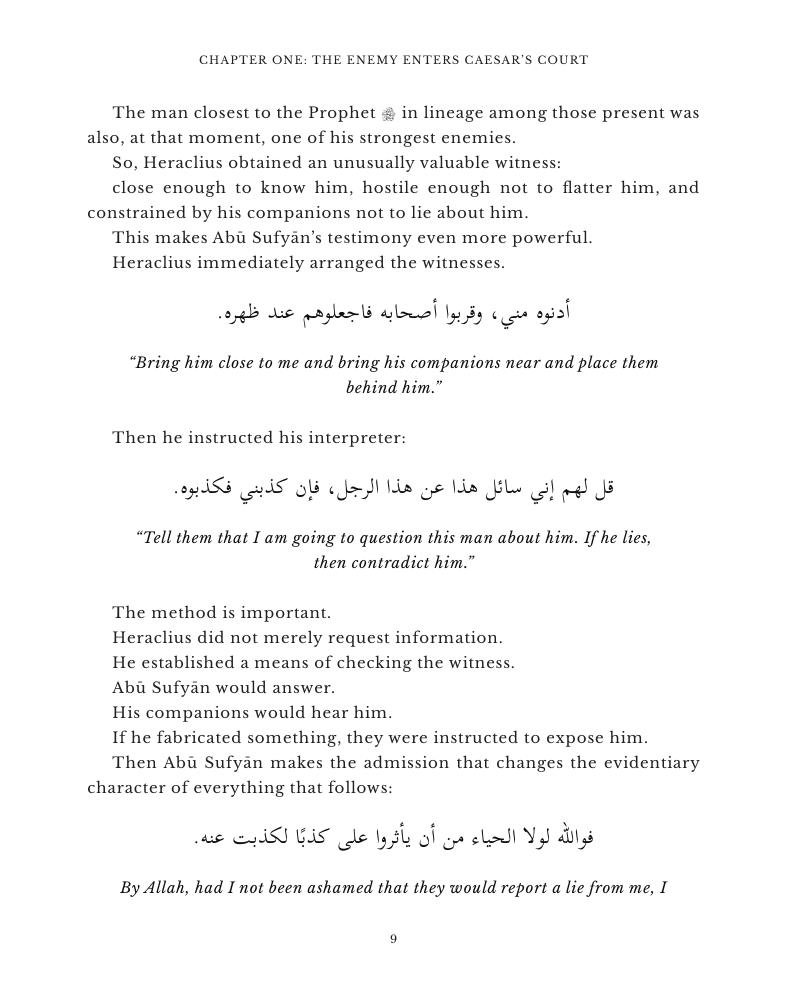
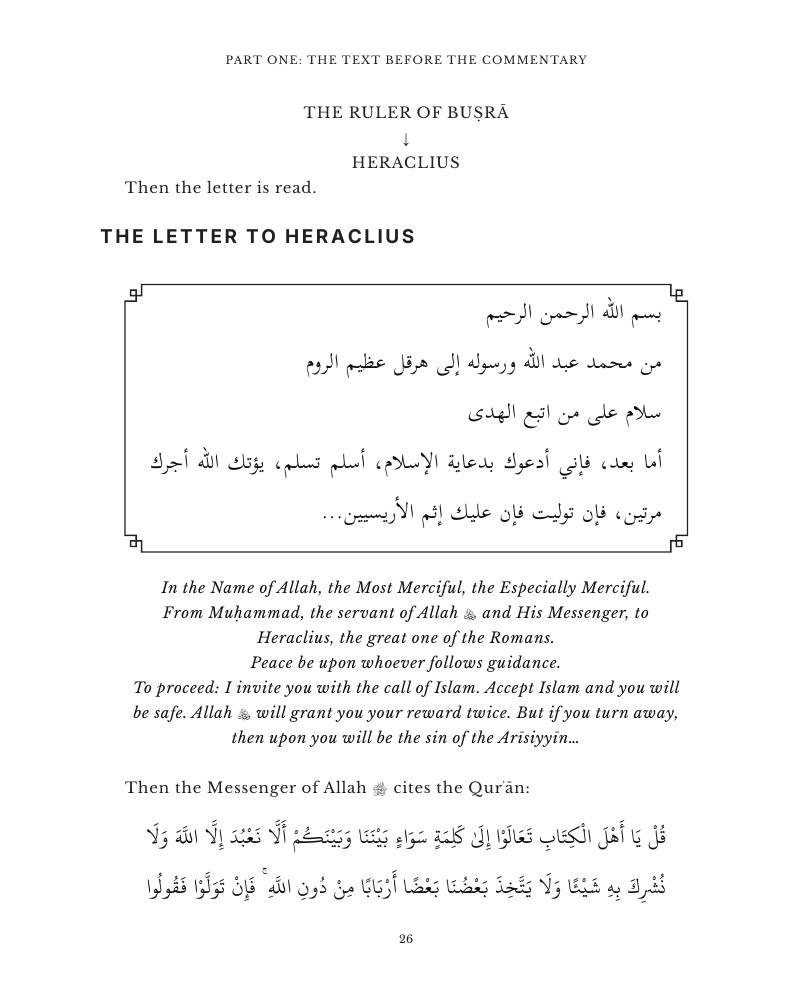
An English-language Islamic book isn't a plain English manuscript. Quran and Hadith citations need a consistent reference convention, transliterated Arabic terms need correct diacritic handling, and short Arabic phrases quoted inline need to render properly next to English text — and most generic book formatters have never had to solve any of it. Format Fix formats English Islamic books around what the content actually contains, not around a template built for English fiction.
English Islamic book formatting is the layout and typesetting of English-language books that quote or reference Islamic scripture — Quran translations, Hadith collections, Tafsir, Sharia and fiqh reference works, and general Islamic non-fiction. The English text itself formats like any left-to-right manuscript; what's different is everything the content pulls in around it: a consistent Quran/Hadith citation system, correctly rendered transliterated Arabic terms, and short Arabic-script quotations sitting cleanly inside English paragraphs.
A generic book formatter can lay out English prose correctly and still get every one of these wrong, because none of them are English-language problems:
This page covers Islamic scripture and reference conventions specifically — if your English manuscript centers on a different religious tradition, mention that when requesting a quote so the citation approach is scoped correctly.
There's no single universal standard the way there is for, say, a legal citation — but there are conventions readers and reviewers expect, and inconsistency inside a single book is what actually damages credibility.
Publisher and institutional style guides can specify their own preferred citation format — when one exists, it's followed exactly; when it doesn't, a consistent convention is established and confirmed with the author before formatting begins.
Transliterated Arabic words — Ṣalāh, Zakāh, Qur'ān, Ḥadīth — carry diacritical marks that most word processors don't handle consistently, and most authors don't type the same word the same way twice across a 300-page manuscript.
The same word appears as "Salah," "Salaah," and "Ṣalāh" in different chapters, because no single transliteration standard was set before writing began.
Macrons and dots under letters get lost during copy-paste between Word versions or when a document is exported and reopened in a different program.
Transliterated terms are italicized the first time they appear and then inconsistently afterward, or never italicized at all — a style decision that needs to be made once and applied throughout.
A font without full diacritic support silently drops or misrenders the special characters, which often isn't noticed until the print proof arrives.
A short Arabic phrase pasted directly into an English paragraph without correct directional handling can shift surrounding punctuation or spacing.
Nearly every issue above is prevented by fixing a transliteration standard before the manuscript is finalized, not correcting it word-by-word after the fact.
"The Prophet (peace be upon him) emphasized salah and zakaah as pillars of faith, and referred to the Quraan and Hadeeth as the foundation of guidance."
Four spellings, inconsistent italics, no diacritics at all."The Prophet ﷺ emphasized Ṣalāh and Zakāh as pillars of faith, and referred to the Qur'ān and Ḥadīth as the foundation of guidance."
One spelling standard, consistent italicization, diacritics applied throughout.A short Quranic or Hadith phrase quoted in Arabic script within an English paragraph is set as an isolated right-to-left run inside the surrounding left-to-right text — the Arabic reads correctly in its own direction while the English on either side is unaffected. Done incorrectly, this is where punctuation lands on the wrong side of the Arabic phrase, or where spacing around the quotation collapses. This is the same directional-handling discipline used across every bilingual project in the portfolio, applied here at phrase level instead of full-page level. See Mixed Arabic-English Text: Numbers, Names & Dates for the reverse case — numbers, names, and dates embedded inside Arabic text.
A consistent Quran/Hadith citation convention established and confirmed with the author before formatting begins.
Diacritics and spelling standardized for every transliterated term across the full manuscript, not spot-checked.
Short Arabic-script quotations set correctly within English paragraphs, with direction and spacing verified.
Scripture, scholarly, and secondary-source citations formatted to one consistent system throughout.
Trim size, margins, and embedded fonts set for physical publication, including any transliteration diacritics. See Print-Ready PDF Formatting for the technical specifics.
Digital formatting that preserves diacritics and inline Arabic quotations across EPUB readers and Kindle.
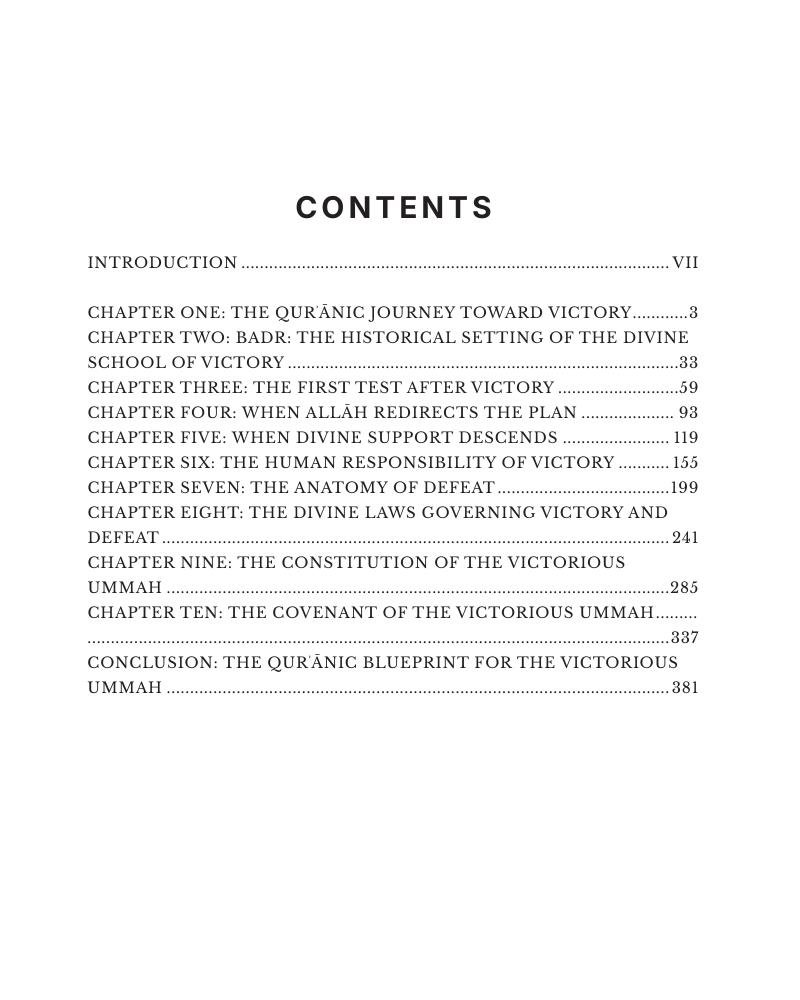
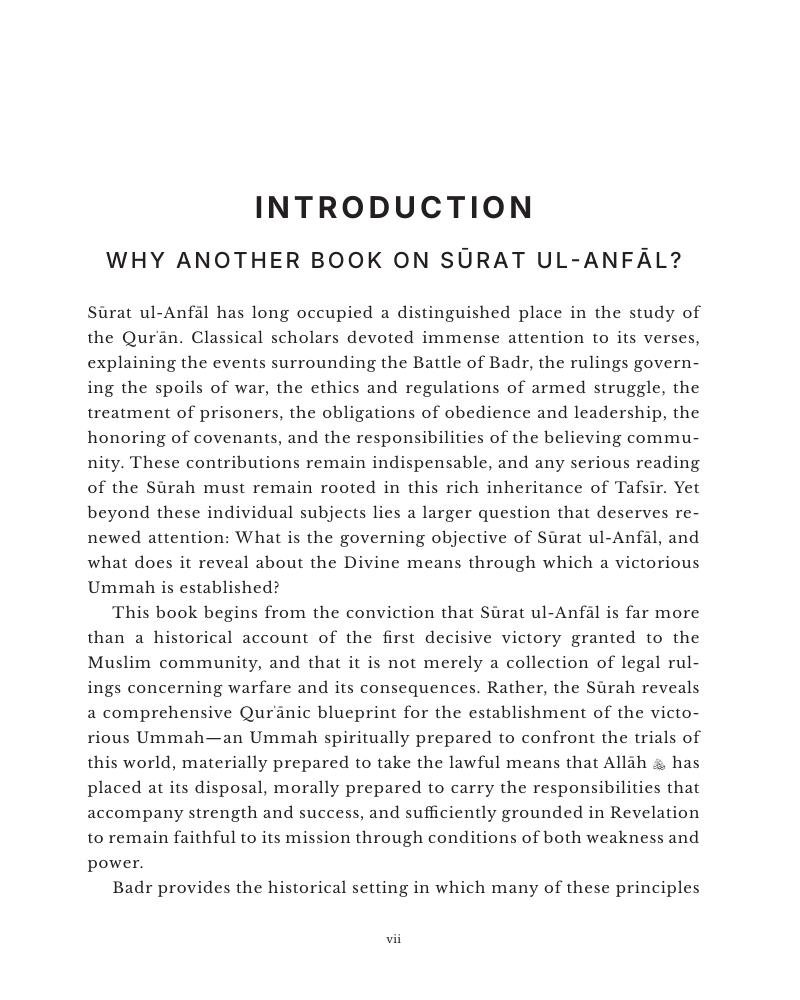
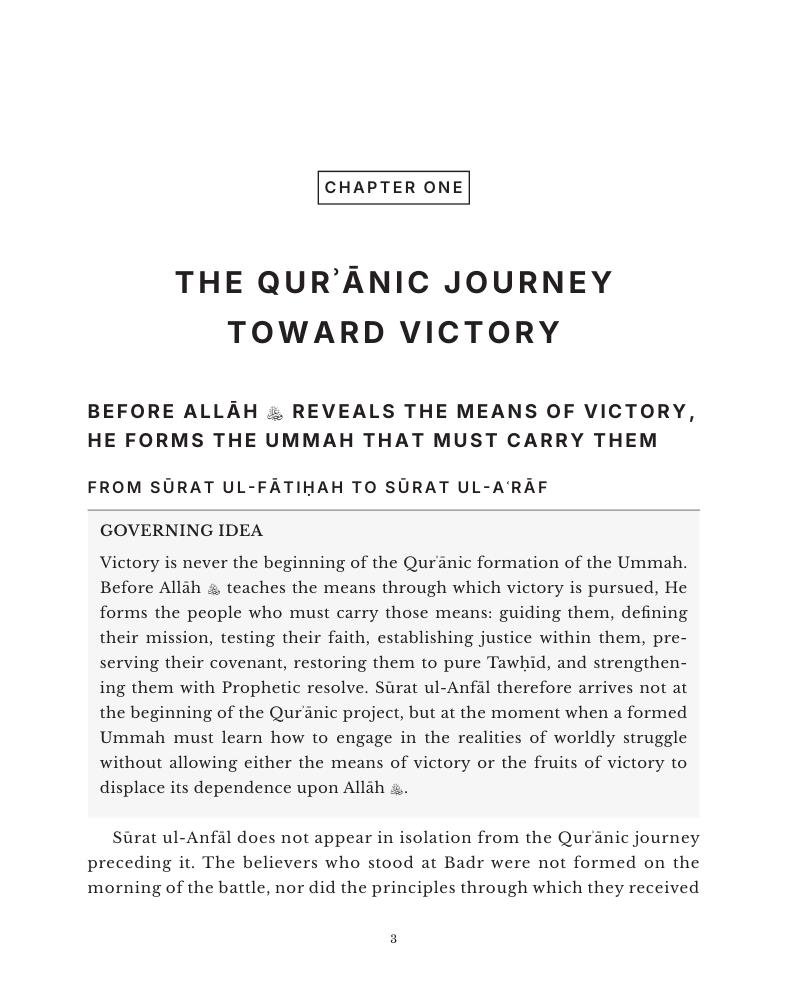
Real pages from finished projects, showing citations, transliteration and Arabic quotations inside English text. Click any page to enlarge it.
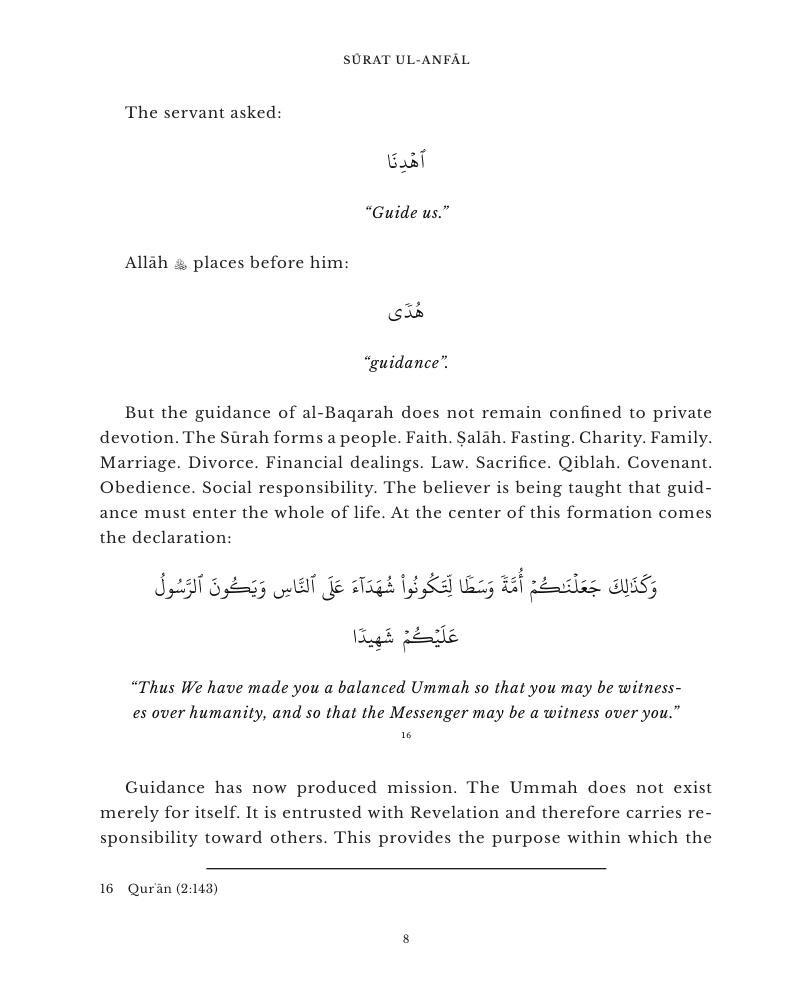
A Quranic study, with chapter structure, glossed Arabic terms and numbered footnotes.
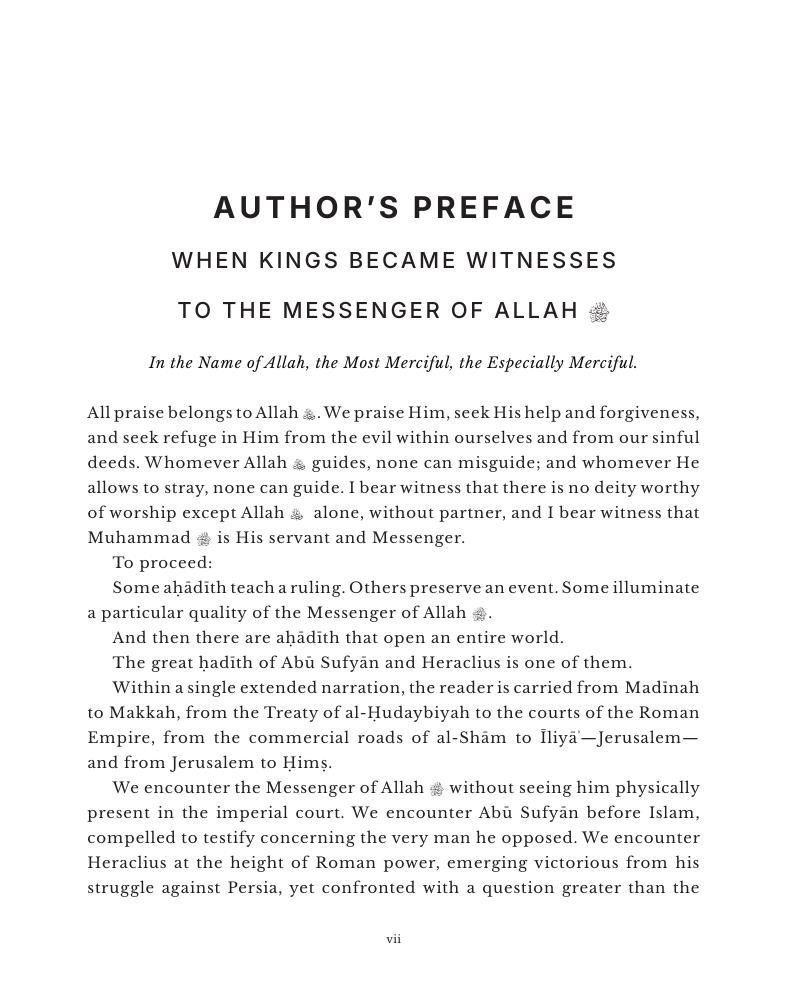
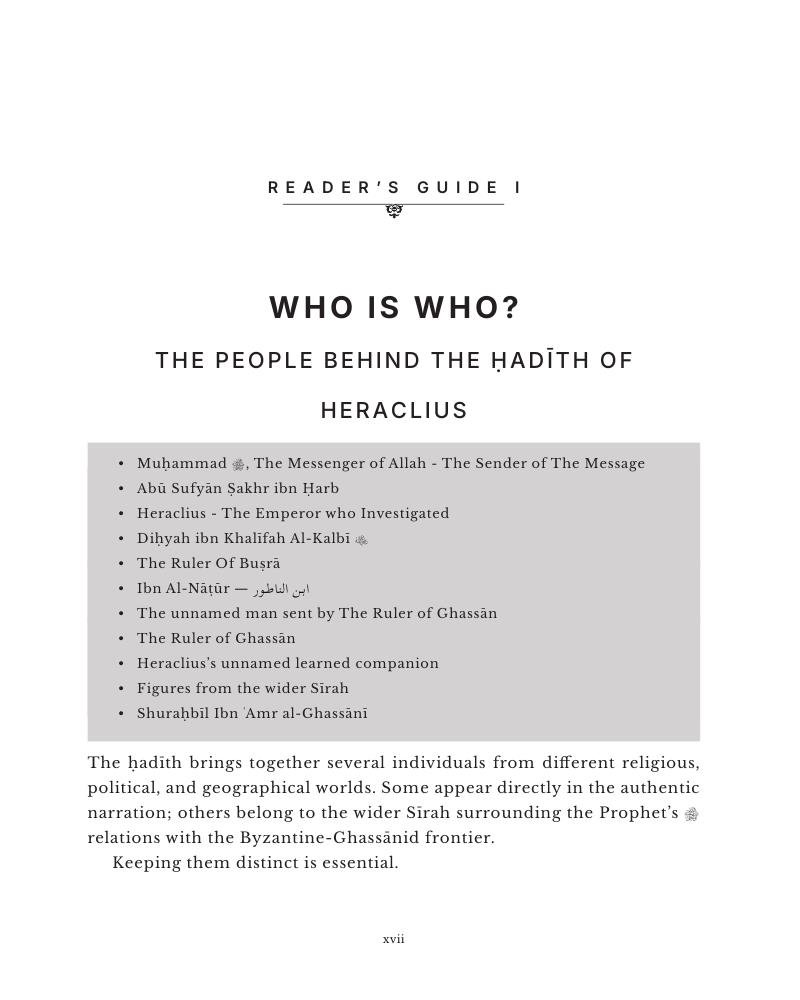
A hadith narrative, with Arabic quotations set inside English text and a reader's guide.
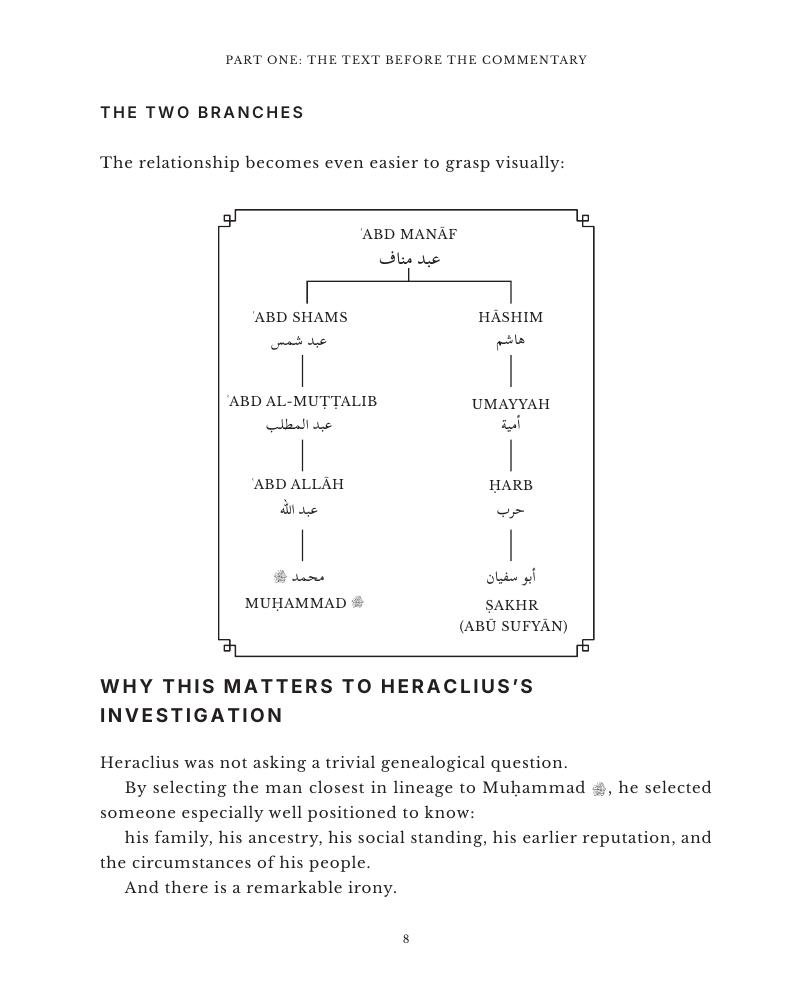
A guidebook, with Quranic references, hadith commentary and a glossary of Arabic terms.
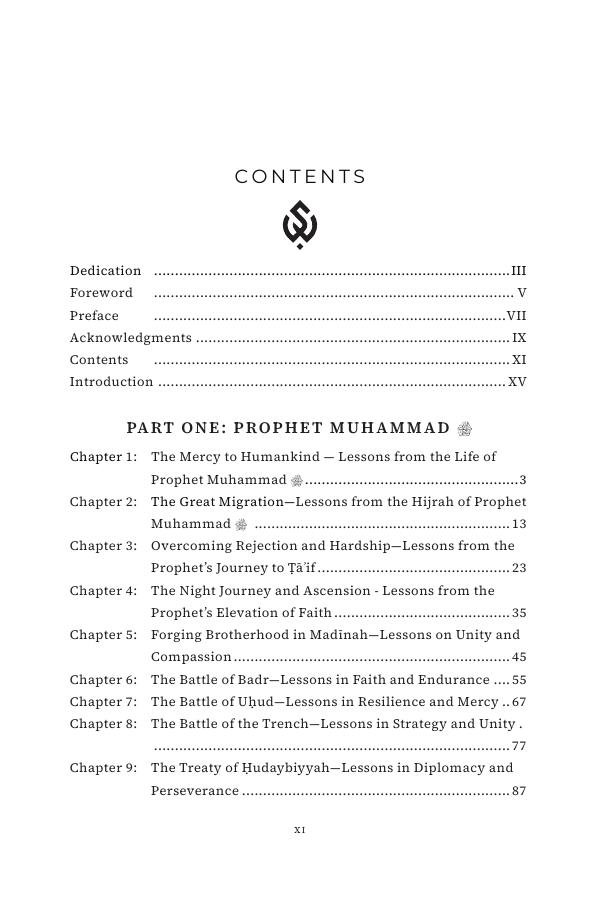 Contents
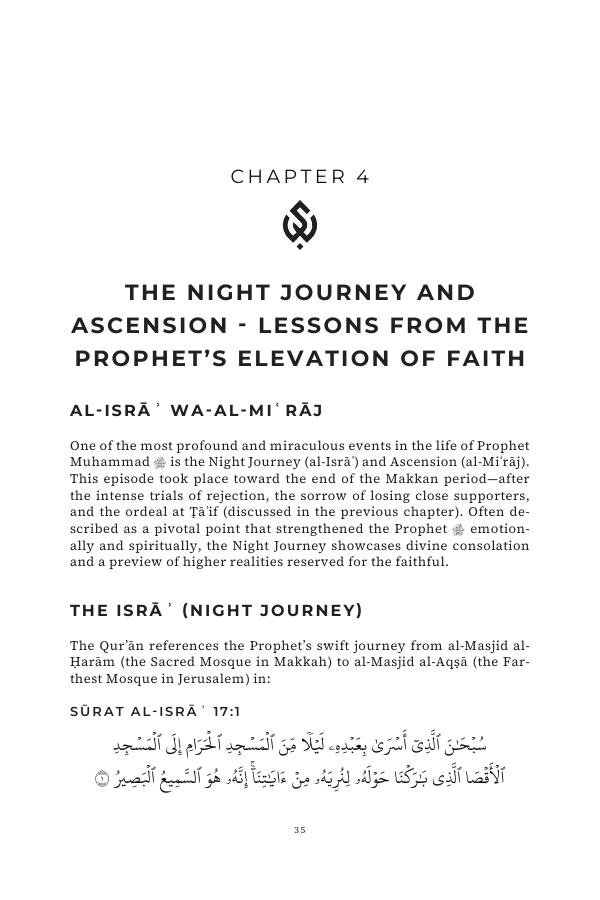 Chapter opener
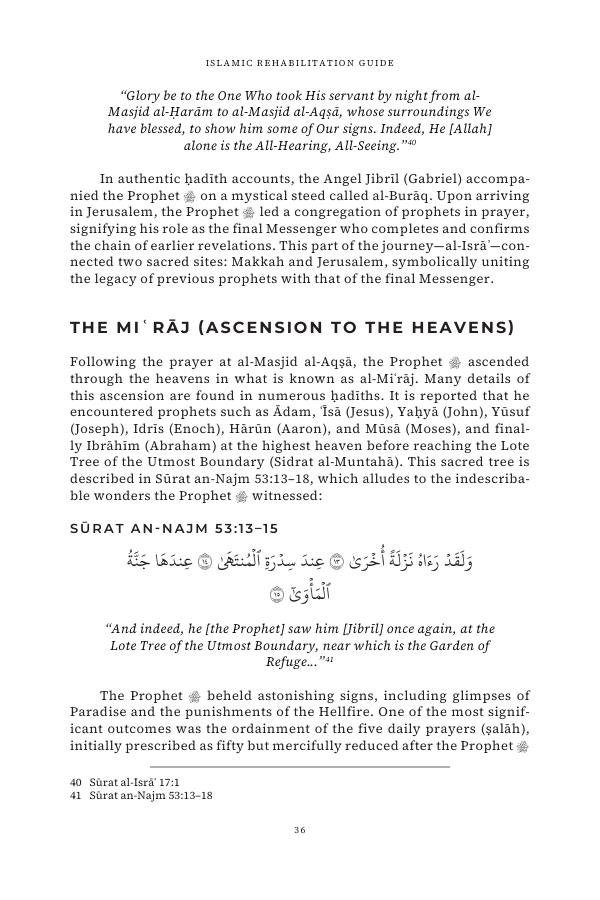 Quranic verses with references
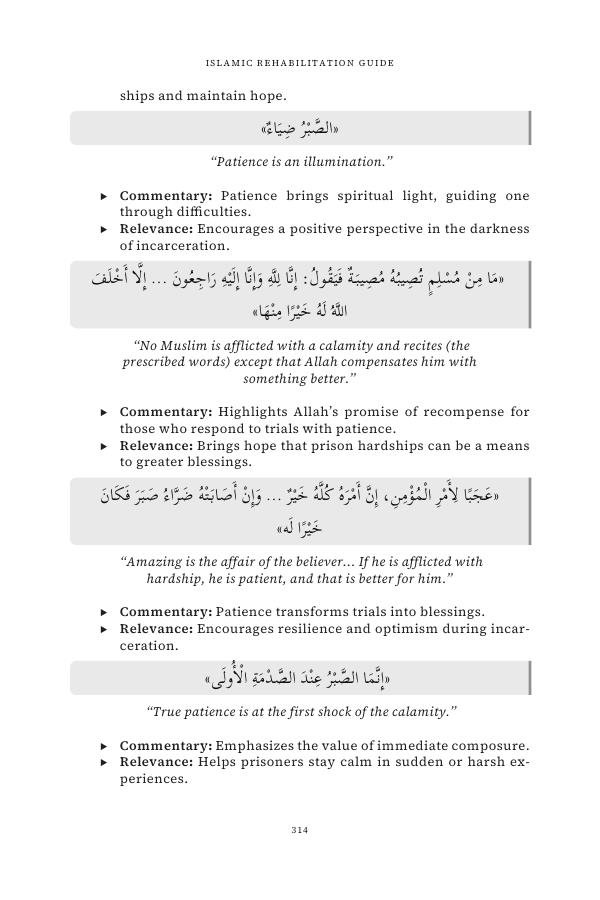 Hadith with commentary
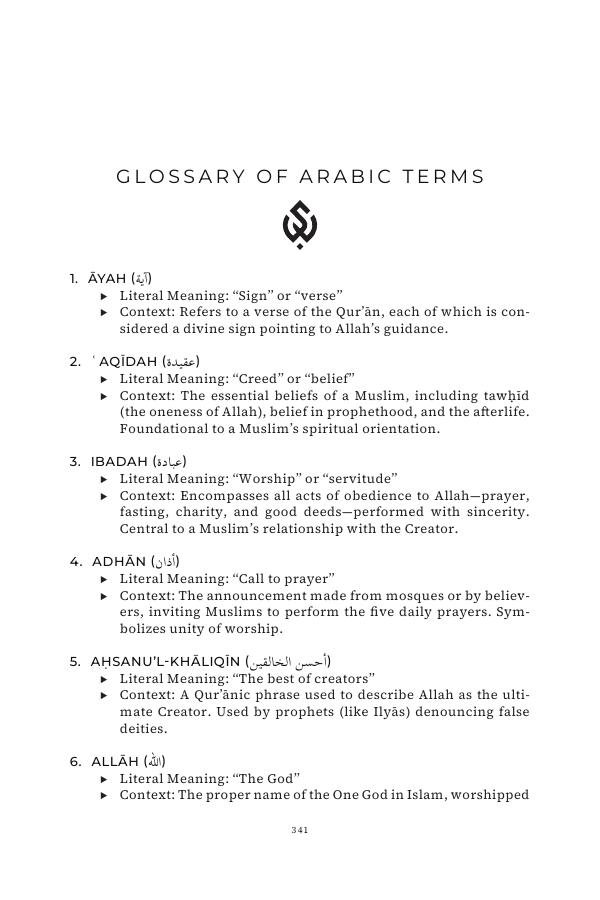 Glossary of Arabic terms
See more finished work in the portfolio.
The manuscript is reviewed for citation consistency, transliteration patterns, and any inline Arabic quotations before layout starts.
A transliteration and citation standard is confirmed with the author — or the publisher's existing style guide is applied exactly.
The book is typeset with corrected transliteration, consistent citations, and properly handled inline Arabic quotations.
Print-ready PDF, EPUB, or both are generated, with diacritics and inline Arabic verified in each output.
A full pass checks citation consistency and transliteration spelling across the entire finished file before delivery.
English-language Tafsir, Hadith collections, and Sharia reference works needing consistent citation and transliteration.
Islamic non-fiction or devotional titles quoting scripture, headed for KDP or print-on-demand.
Sharia-compliant standards documents and scholarly works with heavy citation and cross-referencing.
English translations of Arabic or Urdu Islamic texts needing the English side formatted to match the source's citation rigor.
These overlap because Islamic publishing often involves more than one language — here's what separates them.
An English-language book quoting or referencing Islamic scripture — this page's scope. The manuscript is written primarily in English.
A book presenting substantial Arabic and English content side by side or in parallel sections, not just short quoted phrases. See Bilingual Arabic-English Book Formatting.
A manuscript written primarily in Arabic, with its own structural and typesetting demands. See Arabic Editorial Formatting.
A flat per-word or per-page rate treats a plain devotional title the same as a heavily-cited scholarly work — the two take very different amounts of formatting time.

Every English Islamic project is formatted and typeset personally by Ata Rafi, Founder and Chief Formatter at Format Fix, who has typeset English-language scholarly and religious works — including Tafsir Usmani in English — for institutions such as AAOIFI, Looh Press, and Imam Ghazali Publishing. Citation consistency and correct transliteration aren't an afterthought here; they're checked with the same rigor as the Arabic-script work this site is built around.
It's the layout and typesetting of English-language books that quote or reference Islamic scripture — Quran translations, Hadith, Tafsir, and Islamic non-fiction — with correct citation formatting, transliteration, and inline Arabic-quotation handling.
Consistently, throughout the whole book. A sura:verse format (or named-surah format) is picked once and used every time; hadith citations carry their collection and reference number so they can be verified; translator attribution is stated clearly. A publisher's existing style guide is followed exactly when one exists.
Because most authors and word processors don't apply diacritics consistently across a long manuscript. The same word ends up spelled multiple ways, diacritics get dropped during copy-paste, and italicization is applied inconsistently — all fixed by setting one transliteration standard before formatting.
Yes — short Quranic or Hadith phrases in Arabic script are set as correctly-directional right-to-left runs within the surrounding English text, with punctuation and spacing verified around them.
Yes. This page covers English-language books with short quoted Arabic phrases or scripture references. A book presenting substantial Arabic and English content side by side is bilingual formatting — see Bilingual Arabic-English Book Formatting.
Both. Print-ready PDF and EPUB/Kindle files are generated from the same corrected source, with diacritics and inline Arabic quotations verified in each output format. If your book also includes substantial Arabic-script sections needing their own EPUB conversion, see Arabic eBook Formatting for that side of the process.
Quotes are based on manuscript length, citation density, and how much transliteration and inline Arabic-script correction the manuscript needs — not a flat per-word rate, since a heavily-cited scholarly work takes more work than a straightforward devotional title of the same length. See Pricing & Quote for the factors that apply across every service.
Get a free quote based on your actual manuscript — citation density, transliteration, and output format.
Request A Free Quote